One of the most significant shifts in lighting design today is also one of the least visible.
We are being asked to do more with less.
As energy codes continue to evolve, allowable lighting power densities have steadily decreased. The goal is clear: create more efficient, sustainable buildings that use energy responsibly.
For designers, however, the conversation extends beyond compliance.
Every lighting decision influences how a space is experienced. It shapes atmosphere, creates visual hierarchy, and helps define the character of a room.
When lighting allowances become more constrained, the challenge is not simply reducing wattage. It is maintaining the richness, depth, and intentionality that quality design requires.
The most successful projects recognize that lighting is not about quantity.
It is about purpose.
Where should attention be focused?
How should a space transition throughout the day?
What architectural features deserve emphasis?
These questions become even more important as the available design envelope narrows.
At KDG, we see this as an opportunity to be more deliberate. Thoughtful fixture selection, strategic layering, and early coordination allow lighting to support both performance goals and the overall design vision.
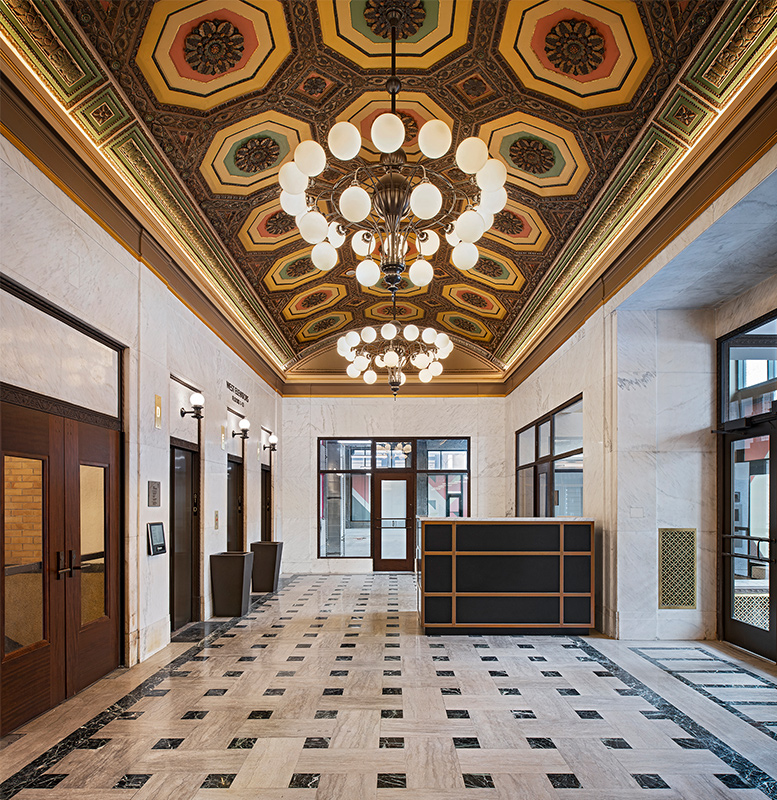
A great example is the historic Detroit Free Press Lobby. Historically, the space relied primarily on its decorative chandeliers for illumination. While the fixtures remained an important part of the building’s character, our team worked closely with the lighting designer to introduce a concealed perimeter uplight that subtly washes the ceiling and architectural details with light. The result is a more balanced, inviting environment that enhances the historic architecture while respecting its original character.
The solution was not adding more decorative fixtures.
It was using light more intentionally.
Because the best environments are not defined by how much light they contain. They are defined by how thoughtfully that light is used.