
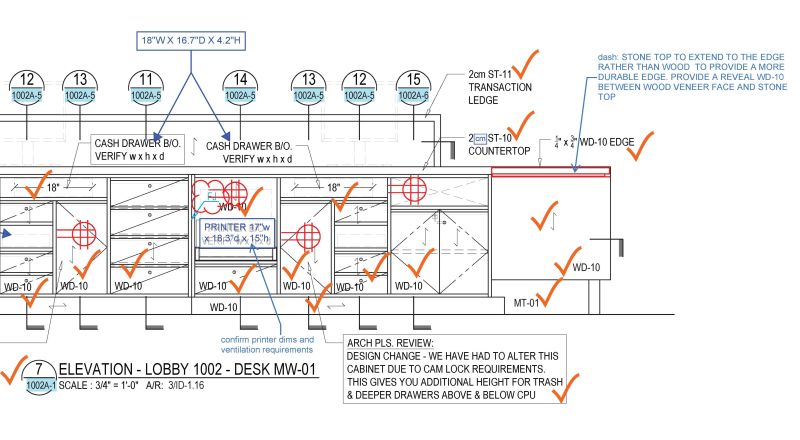
Great design does not move directly from drawings to construction. There is an important phase in between. Shop drawings.
While construction documents establish the design intent, shop drawings determine how many of those ideas are ultimately built. They transform concepts into fabrication, coordination, dimensions, and installation strategies. This is where many of the project’s most important design decisions are refined.
Custom millwork, feature stairs, curtainwall systems, decorative lighting, specialty ceilings, and architectural details are rarely resolved through a single drawing. They require collaboration between architects, fabricators, contractors, and consultants to ensure the final product aligns with the original vision.
- A custom reception desk may appear simple in a rendering, but the shop drawing process determines how structure, access panels, electrical requirements, tolerances, and finish materials come together to create the final experience.
- A façade may be designed around a specific rhythm and proportion, yet panel sizing, attachment systems, and termination details are often finalized during fabrication.
- A custom stair may satisfy code requirements on paper, but the shop drawing phase determines whether the finished assembly feels refined, intentional, and integrated with the overall design.
These are not simply technical exercises. They are design opportunities.
At KDG, we view submittal and shop drawing review as a critical part of protecting design intent. Every review is an opportunity to ensure that materials, proportions, alignments, and details continue to support the project’s overall vision.
This level of involvement is particularly important on hospitality, multifamily, historic rehabilitation, and design-driven projects where the smallest details often have the greatest impact on the final experience.
The goal is not to redesign the project during construction. The goal is to ensure the project being fabricated is the project that was envisioned.
Because exceptional architecture is not defined solely by great ideas. It is defined by how carefully those ideas are carried through every stage of execution.
Construction Administration provides that continuity. And continuity is what transforms design intent into built reality.
